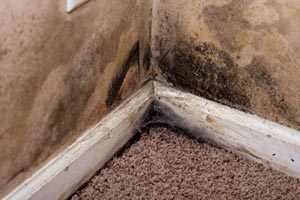
Mold is one of the most common and costly issues facing Denver-area homeowners. Colorado’s climate, with its mix of dry air, seasonal moisture, and temperature swings, creates the kind of conditions where mold can take hold before most people ever suspect it. The challenge is that the earliest signs are often subtle, easy to dismiss, and rarely visible to the naked eye.
Bryce Franklin, Large Loss Project Manager at Paul Davis Restoration of Greater Denver, knows this all too well. Having worked on some of the region’s most severe mold cases, he has seen firsthand how a small, overlooked problem can escalate into a full remediation project. His advice is straightforward: start paying attention before you start seeing spots.
What are the early signs of mold that homeowners might often overlook? Bryce addresses this. He says, “Early signs tend to be within your body. Your body is going to be a good indicator if you start to get the sniffles and it’s not allergy season. A musty smell is also a good indicator. To identify the source, you should look for leaky faucets or things that are going to be inducing moisture and creating that stagnant, stable environment for the mold to start to grow and start to move. You want to try to eliminate that as much as possible.”
Franklin’s insight points to something most homeowners overlook: the signs of mold often show up in how you feel inside your home, not in what you see. By the time discoloration appears on walls or ceilings, the underlying moisture problem has typically been active for some time. Catching the signals earlier gives you a real advantage.
Your Body: The First Warning System
One of the earliest and most reliable indicators of mold is a change in how you feel while you are at home. If you or family members notice persistent sneezing, congestion, watery eyes, or general respiratory irritation that seems to ease when you leave the house, that pattern deserves attention. These are not always allergy symptoms. They can be your body’s response to airborne mold spores that are not yet visible.
Pay particular attention to whether symptoms follow a pattern tied to specific rooms or times of day. Ground-floor areas, basements, bathrooms, and spaces near plumbing fixtures are especially worth monitoring. If someone in your household experiences chronic sinus issues or recurring headaches with no clear cause, mold exposure is a reasonable possibility to investigate.
The Musty Smell: What Your Nose Knows
A persistent musty or earthy odor, especially in enclosed spaces like closets, crawlspaces, or under sinks, is among the most telling non-visual signs of mold activity. This smell is produced by microbial volatile organic compounds (MVOCs) released as mold colonies metabolize organic material. It is distinct from ordinary dust or staleness, and it tends to linger regardless of ventilation.
If you notice this odor after returning home from a vacation, after heavy rain, or following any plumbing event in the house, take it seriously. Even a faint, intermittent smell can indicate an active mold colony in a hidden area such as inside wall cavities, beneath flooring, or behind cabinetry.
Physical Signs to Watch For
Once you move beyond the sensory indicators, there are concrete physical signs that warrant inspection. Not all of them look like what most people picture when they think of mold.
Water Stains & Discoloration
- Yellow, brown, or grayish stains on ceilings, walls, or floors often signal moisture intrusion that may already be supporting mold growth behind the surface.
Peeling or Bubbling Paint
- Paint that is peeling, bubbling, or blistering away from a surface is frequently a sign of moisture trapped behind the wall, creating favorable conditions for mold.
Warped or Buckled Surfaces
- Floors, walls, or ceilings that have warped, swollen, or become soft to the touch indicate prolonged moisture exposure, a primary driver of mold colonization.
Visible Mold Growth
- Black, green, white, or gray spots on grout lines, window sills, or behind appliances are direct indicators. Even small visible patches often represent larger hidden growth.
Condensation Patterns
- Frequent condensation on windows, pipes, or cold surfaces creates the moisture mold needs. Recurring condensation in the same spots should prompt a closer inspection.
Grout and Caulk Darkening
- Bathroom and kitchen grout or caulk that has turned dark or stained, even after cleaning, often contains embedded mold colonies that surface-level cleaning cannot reach.
Finding the Source: Moisture Is the Root Cause
As Franklin points out, eliminating mold begins with identifying and addressing the moisture source that is sustaining it. Mold requires a stable, moist environment to grow and spread. Without that foundation, colonies cannot take hold or expand.
Common moisture sources to inspect around your property include leaky faucets and fixtures, supply lines under sinks, roof penetrations, window and door seals, HVAC condensate drain lines, foundation and basement walls, and exhaust ventilation in bathrooms and kitchens. In Denver, the combination of high-altitude ultraviolet exposure that ages building materials faster than lower-elevation climates, paired with periodic snowmelt intrusion, creates a specific set of conditions that homeowners should account for.
Areas that stay dark, unventilated, or undisturbed for extended periods are particularly vulnerable. A spare bathroom used infrequently, a utility closet where pipes pass through, or a corner of a basement that rarely gets foot traffic can all become problem zones without obvious signs developing for weeks or months.
When to Call a Professional
Not every discoloration is mold, and not every mold situation requires professional remediation. However, certain circumstances call for expert evaluation rather than a DIY approach. If visible mold growth covers an area larger than a foot, if the mold is located in your HVAC system, if there has been a flood or significant water intrusion event, or if household members are experiencing health symptoms that may be related to mold exposure, professional assessment is the appropriate next step.
Professional remediation goes beyond surface cleaning. It addresses the underlying moisture problem, removes contaminated materials safely, and helps ensure that the environment is restored to a healthy condition. Attempting to clean mold without addressing the source typically results in the problem returning within weeks.
Paul Davis Restoration of Greater Denver provides professional mold assessment and remediation services for residential and commercial properties throughout the Denver metro area. If you have concerns about potential mold damage in your property, reaching out early, before the problem grows, is always the better path.